More than a medical device: the standards landscape
As soon as a robotic system is used medically, regulatory requirements add up rather than replace one another. At the top level sits medical device regulation itself: the MDR as the European legal framework, flanked by ISO 13485 for the quality management system and ISO 14971 for risk management. Below that follows a whole series of product-specific standards: IEC 60601 for the electrical safety of the device, ISO 10993 for the biocompatibility of all materials that come into contact with the body, IEC 62304 for the software lifecycle, IEC 62366-1 for usability, and IEC 81001-5-1 as a comparatively young standard specifically for the cybersecurity of networked health software.
In parallel, the mechatronics and machinery-safety world of robotics itself also needs to be kept in view: ISO 8373 for basic terminology, ISO 10218 and ISO/TS 15066 for the safety of industrial robots and collaborative robotics. Even though these standards don't necessarily transfer one-to-one to a medical device, they provide important foundations and points of reference for mechanical safety. And because robotically assisted surgical systems form their own category once again, DIN EN IEC 80601-2-77 adds a third, highly specialized layer of standards that specifically addresses this interface between medical device and robotics.
The result: a development team for medical robotics operates not in one, but in at least three overlapping standards worlds simultaneously – medical device, machinery safety, and robotics. Anyone who looks at just one of these in isolation typically misses requirements from the other two.
Software as the core of innovation
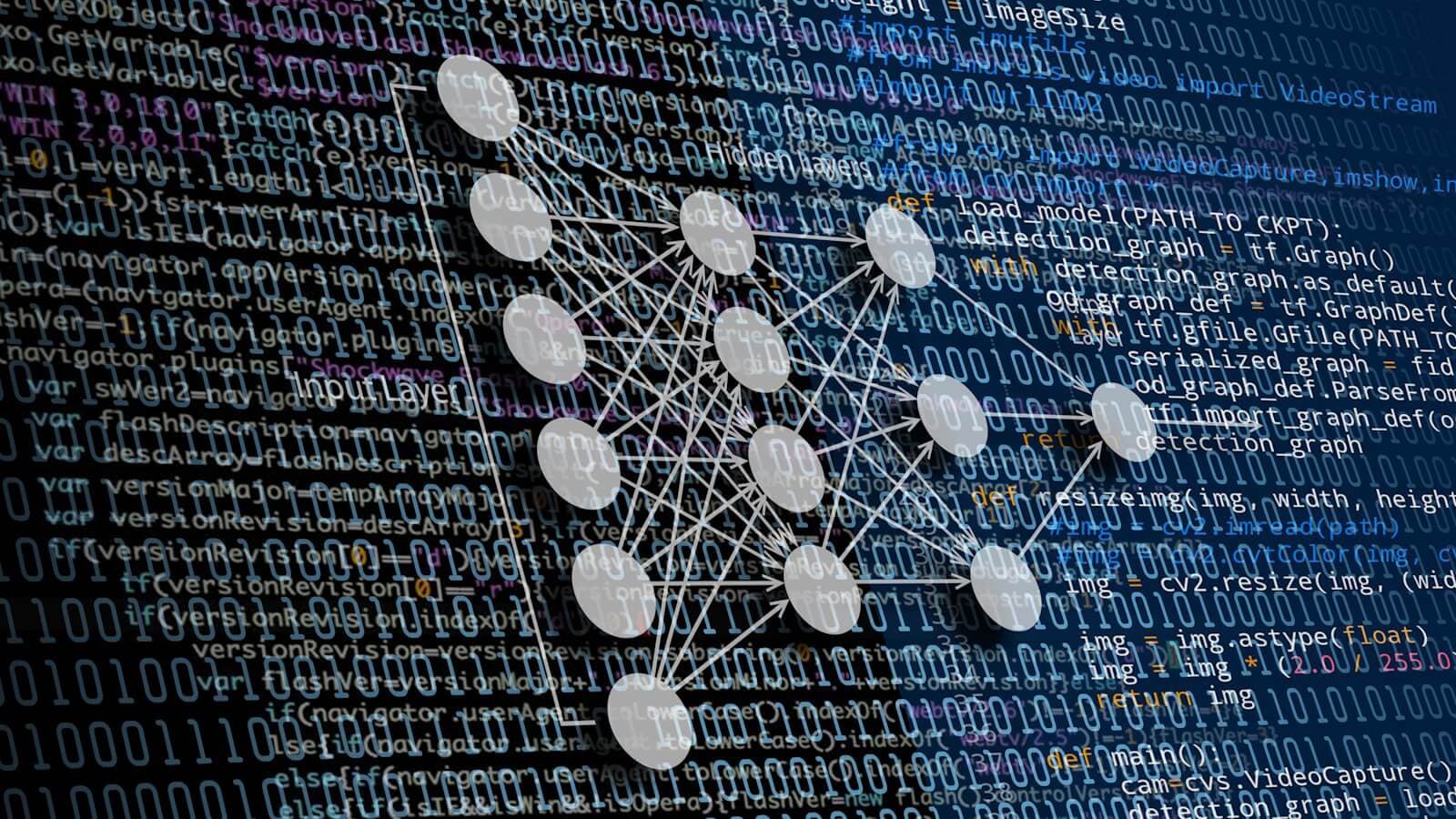
The real innovation in modern medical robotic systems today rarely lies in the mechanics – these are mature in many areas. It lies in the software. Image segmentation and object recognition, often AI-supported, enable more precise navigation within tissue. Sensor fusion from encoders, force sensors, and cameras gives the system a significantly more accurate picture of the current situation than any single sensor could provide.
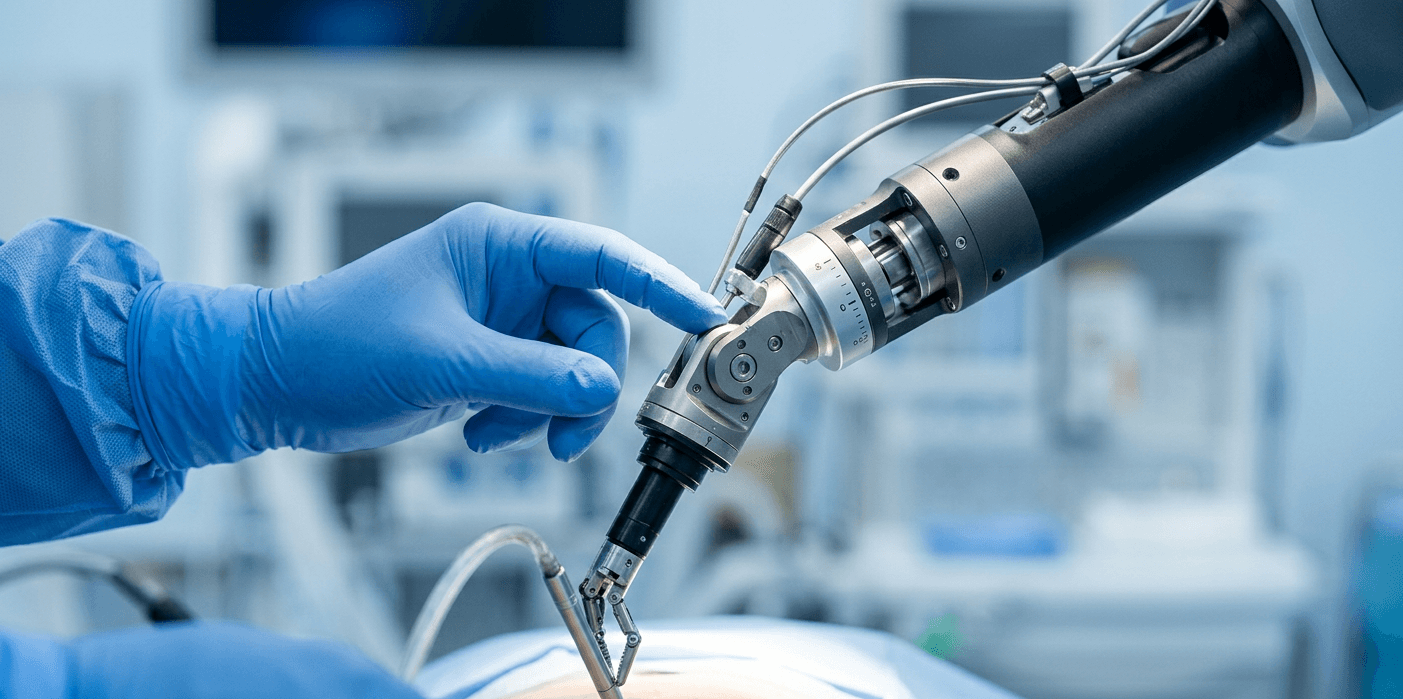
This becomes especially clear when looking at the hand movement of a surgeon at the control console: sensors first capture the position and orientation of the input devices. This raw data then goes through processing involving motion scaling, tremor filtering, and, where needed, motion limiting. Inverse kinematics is then used to calculate which joint angles are required to actually execute the intended instrument movement – coordinated across multiple robot axes, until the actual instrument movement takes place at the patient. This principle of shared control between human and machine is central: the surgeon retains decision-making authority while the system supports, filters, and stabilizes.
For this to work reliably, real-time capability and determinism are required: synchronized control loops and controlled, predictable latencies are not a convenience feature here, but a fundamental requirement for safe operation.
Safety and security: two sides of the same coin
This is exactly where it becomes clear why safety and security cannot be considered separately in medical robotics. On the safety side, risks include unintended movements, excessive force or incorrect positioning, collisions with people or the environment, software faults, operator error, or unclear system states. Development addresses these with motion monitoring and emergency-stop mechanisms, force and position limiting, collision detection, redundant monitoring of safety-relevant functions, and fault-tolerant operation with clear operating modes and clear system feedback.
On the security side, the concerns are unauthorized access, manipulated software, and manipulated communication. The countermeasures: authentication and authorization, signed software updates, and secured communication channels. What looks at first glance like two separate disciplines is, in practice, closely linked – a system that can be brought into an unclear state through operator error also tends to be more vulnerable to attacks that exploit exactly that unclear state. And conversely: a system with manipulated communication can undermine safety mechanisms that are actually meant to protect against precisely such situations.
Benefits and challenges compared
The undisputed benefits of medical robotics – precision, minimally invasive access, reproducibility, motion stability – are matched by real challenges. Acquisition, maintenance, and training costs are high. The regulatory hurdles are, as described above, considerable. And even a technically mature system still has to earn the acceptance of patients and medical staff and be integrated into existing clinical workflows – a point that is often underestimated during development, even though it determines a system's success or failure in everyday use.
Outlook: from assistance to automation
The development of medical robotics is clearly moving in stages: from increasing assistance, through the gradual automation of individual sub-steps – such as suturing – toward a conceivable, considerably more advanced level of automation further down the line, one that will depend on more sensing and feedback. How quickly and how far this path will actually go cannot be seriously predicted today. What is clear, however, is that each of these stages further increases the requirements for safety, security, and regulatory compliance – not the other way around.
This is exactly where our work at NewTec comes in. As a development service provider for safety-critical medical technology, we support the implementation of MDR-, ISO 13485-, and standards-compliant systems – from functional safety to cybersecurity to the integration of AI into safety-related systems – wherever precision and regulatory compliance need to come together.