What exactly is a medical robot?
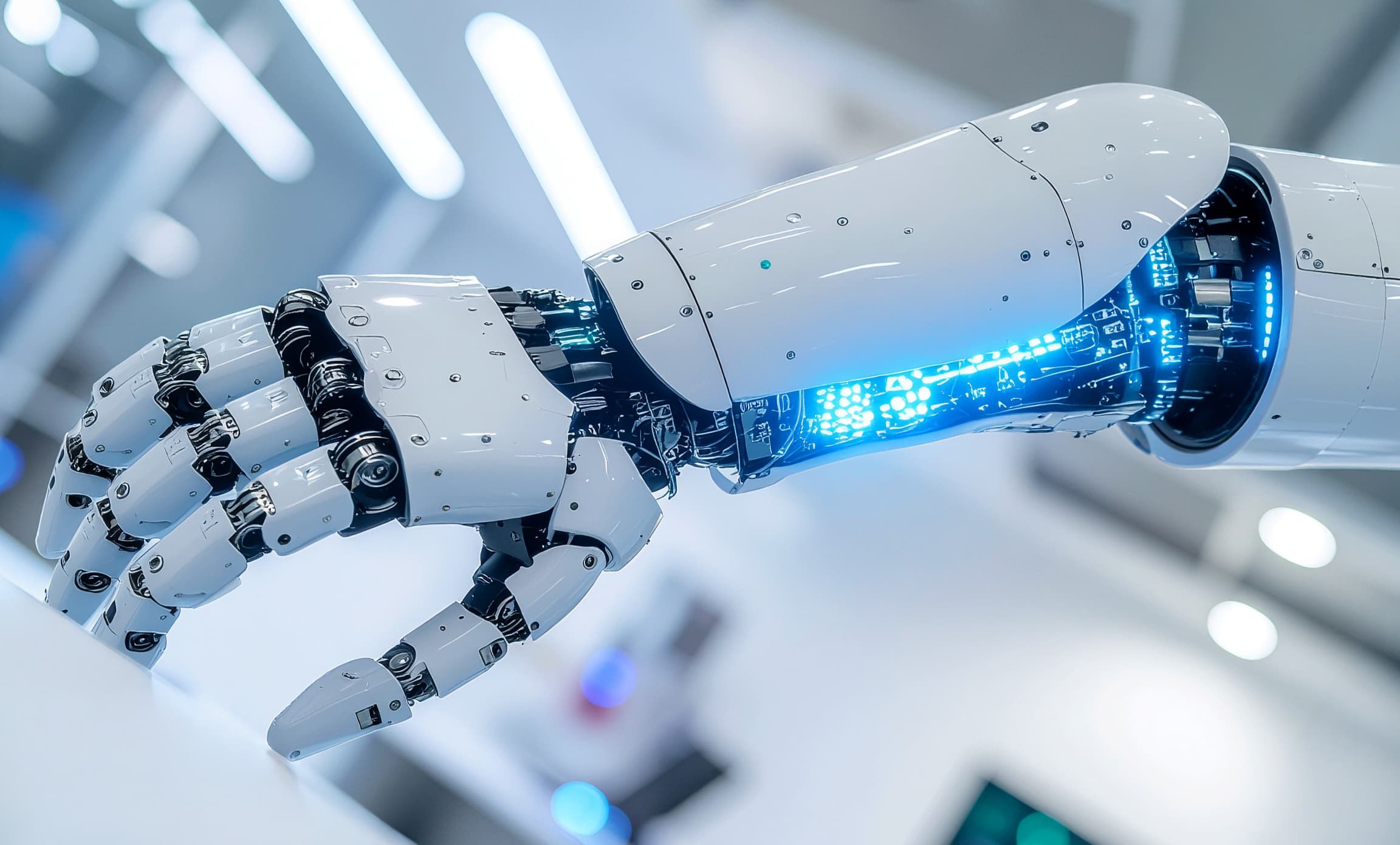
The ISO 8373 standard series provides the basic terminology the entire industry relies on. Simply put: a robot is a programmable, self-moving mechanism with a certain degree of autonomy – equipped with sensors, mechanics, a controller, and usually a user interface as well. Robotics as a discipline deals with the development, manufacturing, and application of such systems, classically across four major fields: industry, household, military – and medicine.
A medical robot, accordingly, is a robot used as a medical electrical device or system. This seemingly simple classification has significant consequences: as soon as a robotic system is used in a medical context, it no longer falls only under robotics standards, but additionally under the entire regulatory framework for medical devices. More on that in part two of this series.
Surgery: the best-known application
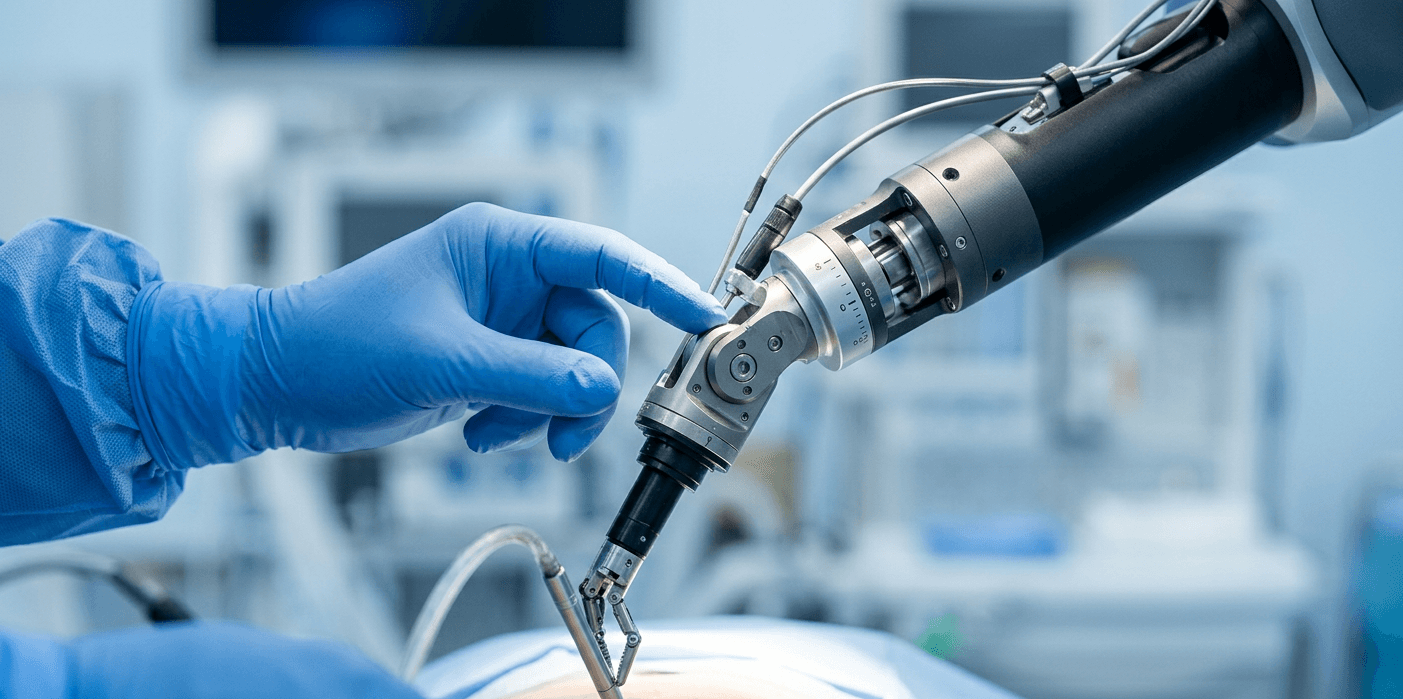
When people talk about medical robotics, most first think of robotically assisted surgical systems (RASS). The standard DIN EN IEC 80601-2-77 describes them as "medical electrical systems that include a programmable mechanism to position or guide surgical instruments." Well-known examples include the da Vinci system for general and visceral surgery, ROSA ONE Brain for neurosurgical procedures, and PRECEYES for highly precise eye surgery.
The benefits of these systems can be traced back to three effects that are increasingly being backed by concrete figures in clinical research: higher precision through controlled, computer-assisted movements, less invasive access with typically less tissue trauma, and improved motion stability through tremor filtering and fine instrument guidance. In retinal microsurgery, for example, a recent study showed a significantly lower deviation from the target trajectory in robot-assisted procedures (26.39 ± 13.22 µm) compared to manual guidance (143.06 ± 91.27 µm) (Chen et al., 2025). Robot-assisted radical prostatectomies also show measurable clinical advantages over open procedures in current comparative data: on average around 577 ml less blood loss, a roughly 1.44-day shorter hospital stay, and around 41% fewer complications (Suartz et al., 2026).
A distinctive feature of many surgical systems is teleoperation: the surgeon controls the robot not directly at the patient's side but from a distance – defined by ISO 8373:2021 as the real-time control of robot motion by a human from a remote location. Just how far this can go was already demonstrated in 2001 by the so-called "Lindbergh Operation": Prof. Jacques Marescaux removed the gallbladder of a patient in Strasbourg via a fiber-optic connection from New York – controlling the ZEUS robotic system from more than 6,000 kilometers away. This first transatlantic telesurgery is still considered a milestone showing that surgical expertise no longer has to be tied to a specific location.
Rehabilitation: relearning movement
A second major field of application is rehabilitation robotics. Systems such as the Lokomat support robot-assisted gait training, while exoskeletons like ReWalk help people with spinal cord injuries walk independently again. The underlying idea: robotic support can promote the relearning of movement patterns in a more targeted and reproducible way than manual therapy alone. In people with acute, incomplete spinal cord injury, robot-assisted gait training showed, in a systematic review, an approximately 45-meter greater walking distance compared to conventional gait training (Nam et al., 2017).
Assistance & care: easing the burden in clinical practice
Alongside surgery and rehab, assistive robots are gaining increasing importance. Systems like Moxi handle logistical tasks in hospitals – such as transporting materials between wards – while humanoid systems like Robear are designed to help with repositioning and lifting patients. The driving force behind this is less technical fascination than genuine staff shortages in care and hospital operations: robots do not take over core medical tasks here, but relieve staff of physically or logistically demanding activities.
Diagnostics & therapy: from biopsy to radiation
Robotics has long since arrived beyond classic surgery as well. In diagnostics, systems like Ion support robot-assisted lung biopsy, enabling access to hard-to-reach tissue with high precision. In therapy, systems like Cyberknife perform robot-assisted radiation therapy, in which a robotic arm positions the radiation source with high precision and in real time, adjusted to the patient's movements.
A look ahead
The range shows: medical robotics is no longer a niche topic within high-tech surgery, but a growing field with very diverse applications – from precision operations to everyday relief in hospital operations. What is often underestimated across all these systems is what lies behind the visible mechanics: the regulatory requirements, the software architecture, and the interplay of safety and security that fundamentally distinguish a medical robotic system from an industrial robot.
That is exactly what part two of this series is about: why medical robotics is far more than just a medical device – and which development challenges manufacturers really have to overcome.
Sources:
- Chen et al. (2025): A soft micron accuracy robot design and clinical validation for retinal surgery, Microsystems & Nanoengineering 11, 170.
- Suartz et al. (2026): Comparative functional, perioperative and oncological outcomes of robot-assisted and open radical prostatectomy, International Urology and Nephrology.
- Nam et al. (2017): Robot-assisted gait training improves walking function and activity in people with spinal cord injury: a systematic review, Journal of NeuroEngineering and Rehabilitation 14, 24.
- ISO 8373:2021 – Robotics – Vocabulary
- DIN EN IEC 80601-2-77 – Medical electrical equipment – Part 2-77: Particular requirements for the basic safety and essential performance of robotically assisted surgical equipment