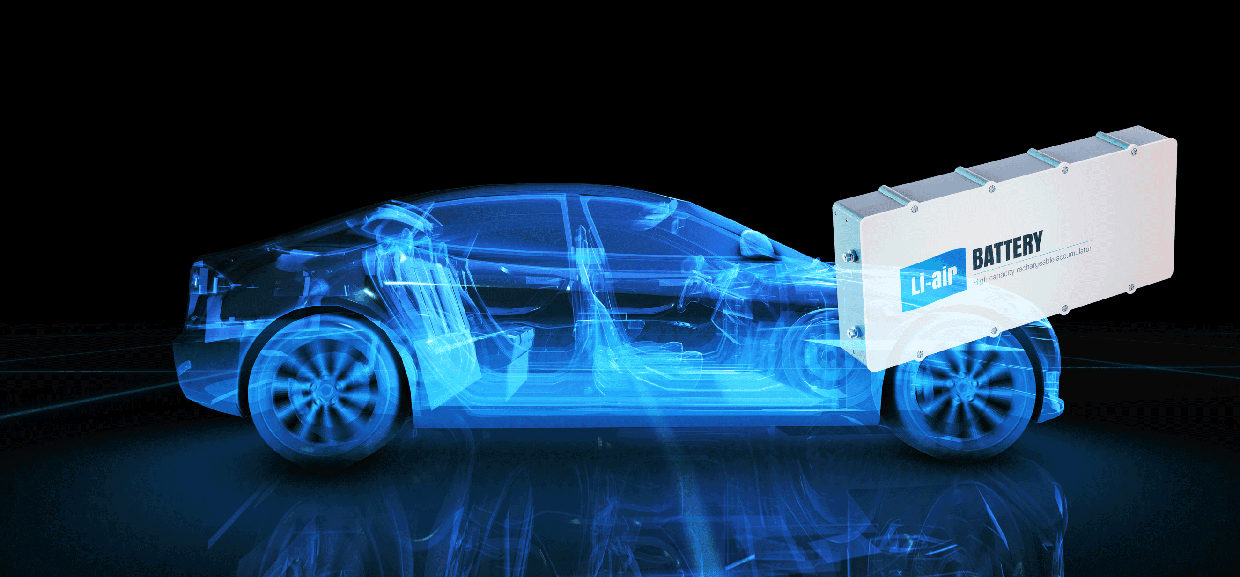
E-mobility is on everyone's lips. But what the public discusses as the obvious solution to the energy crisis presents engineers above all with exciting problems to solve. One example is battery management, an area in which NewTec is also successfully involved.
The energy storage challenge
Cars need energy storage with high power and energy density. Above all, a practical range is essential. As a rule of thumb, electric cars need around 15 to 25 kilowatt hours of energy per 100 kilometres of range, depending on the technology, which today means an average battery weight of around 100 kilograms. The current Tesla Model S Plaid with over 1,000 hp achieves an estimated range of more than 600 kilometres with its 100 kWh battery, but at the cost of more than half a tonne (537 kg) of battery weight. Its battery contains several thousand cylindrical Panasonic cells (18650 format), comparable to standard commercially available round cells.
The BMW i3 (in the 120 Ah version, i.e. 42 kWh) with 170 hp, by contrast, uses 96 large-format prismatic cells from Samsung SDI, which together weigh around 275 kilograms and are designed to deliver a range of up to 307 kilometres. The third common cell format is the thin, rectangular pouch cell with stacked layers of negative and positive electrodes and separators. Experts, for example at Fraunhofer, see the greatest development potential for electromobility in the medium to long term in cylindrical (27100) and above all pouch cells, mainly because of their high energy densities and comparatively low costs.
The battery management challenge
Saving weight with smaller batteries requires a well-developed charging infrastructure, which is still not an option in Germany. To make the necessary charging stops on longer journeys bearable, car batteries should at least allow fast recharging. Fast-charging stations can charge batteries to 80 per cent within 15 to 30 minutes.
Of course, e-car batteries also need to last as long as possible. After all, producing them is energy-intensive, and owners want to enjoy their vehicle for many years without replacing the battery. Today's common lithium batteries still retain 80 per cent of their charge capacity after 1,500 to 3,000 charging cycles. With good care, a service life of more than 10 years is therefore not unrealistic.
However, battery durability also depends heavily on the operating conditions and on compliance with certain operating parameters. The capacity of individual cells can also vary considerably due to manufacturing tolerances. This is where battery management systems (BMS) come into play: they balance the charging of all cells so that the entire Li-ion battery retains optimum capacity, even over thousands of charging cycles.
To do this, a BMS continuously monitors the condition of the battery cells (or of series-connected cell groups), in particular critical parameters such as voltage, state of charge, charging current and temperature. Based on this data, the system controls the charging and discharging of the individual cells and thus prevents extreme states of charge. These irreversibly impair the state of health (SoH) of the battery cells and so shorten the battery's service life, no different from a smartphone charging at a socket at home. As with smartphones, the rule of thumb is that the optimum state of charge of a lithium battery lies between 20 and 80 per cent.
Caution: hot!
The temperature of the energy storage system during operation, i.e. while charging and discharging, and in storage also affects its SoH. In operation, an e-car battery is happiest at around 20 degrees Celsius. In storage, it can be 10 degrees cooler. At operating temperatures below -10 and above 40 degrees Celsius, a battery can suffer serious damage.
Temperature problems during charging and discharging are mainly caused by excessive currents or by external conditions. Depending on its configuration, the battery management system can cool overheated batteries for optimum efficiency, reduce maximum output or pre-heat the battery before a journey in winter. During fast charging in particular, the temperature must be kept constantly low, below 30 degrees Celsius.
It is important to react before failures occur or cells are damaged. The relevant data is stored for maintenance purposes and relevant problems are reported to the driver.
Functional safety
The increased fire risk of lithium-ion batteries places further special requirements on the BMS. These batteries can ignite even when the vehicle is stationary, for example while charging, and a fire can then spread to the area around the charging station. To prevent this, the charging process, state of charge and temperature of the batteries must be monitored and analysed precisely at all times. If a battery overheats, the BMS must stop charging or discharging immediately. In the event of a vehicle accident, it must also be ensured that the high-voltage systems are automatically disconnected from the vehicle electrical system without delay.
Battery manufacturers therefore face the challenge of equipping their product with a BMS that can do all of this. They must comply with binding standards for safety-relevant systems in motor vehicles, such as 661/2009/EC and ISO 26262 for road vehicles. With comprehensive on-board sensors and pre-implemented safety and diagnostic functions, NewTec's standard-compliant BMS reference design NTBMS significantly reduces development time and costs for BMS applications up to ISO 26262 ASIL C.
Wireless is better
The latest trend in battery management systems is the wireless BMS. Eliminating cables brings many advantages: cable connections take up space and material, are laborious to install and must remain accessible for inspection and maintenance later on. Wireless BMS therefore simplify production. They also give manufacturers more flexibility in battery design and save space and weight, which can be used for additional battery capacity.
Wireless BMS are also a step forward in terms of reliability: cable connections can corrode or work loose due to vibration, and they are more prone to faults.
Of course, doing without cables also brings challenges. These are most noticeable in the implementation of functional safety, as safety integrity level ASIL D is recommended for BMS. NewTec is working with Texas Instruments on an innovative project in this area, and you will soon be able to read more about it here.